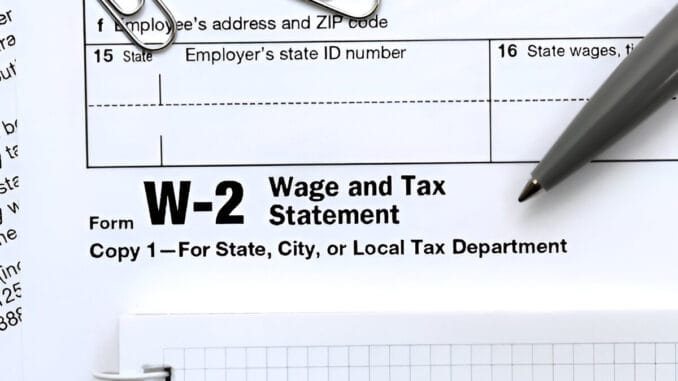
The W-2 form, officially known as the Wage and Tax Statement, is a crucial document in the American tax system. Issued annually by employers to their employees, the W-2 provides a detailed record of the employee’s earnings and the taxes withheld during the fiscal year. The guide below aims to demystify the W-2 form, explaining its purpose, structure, and the significance of each line.
What is a W-2 Form?
The W-2 form is a tax form provided by employers to their employees and the Internal Revenue Service (IRS) at the end of each year. It reports the total annual earnings of an employee, as well as the amount of federal, state, and local taxes withheld from their paychecks. The W-2 is essential for completing individual tax returns and ensuring that the correct amount of taxes is paid.
Why is the W-2 Form Important?
For Employees
- Tax Filing: The W-2 form is necessary for employees to file their annual tax returns accurately.
- Record-Keeping: It serves as a legal document for verifying income and tax payments, which can be useful for various financial purposes, such as applying for loans or mortgages.
- Refund Calculation: The information on the W-2 helps the IRS determine if an employee is eligible for a tax refund or if additional taxes are owed.
For Employers
- Compliance: Issuing W-2 forms is a legal requirement for employers, ensuring they comply with federal tax laws.
- Accurate Reporting: It helps employers maintain accurate records of their payroll and tax responsibilities.
- Employee Satisfaction: Providing a clear and correct W-2 can build trust and transparency with employees.
When and How to Receive a W-2 Form
Timing
- Deadline: Employers must provide W-2 forms to their employees by January 31st of the following year.
- E-Filing: Many employers now offer electronic W-2 forms, which can be accessed via online payroll systems or email.
Receiving the W-2
- Physical Copy: Some employers still distribute paper W-2 forms.
- Online Access: Employees should check with their employer to see if electronic W-2 forms are available.
- Backup Copies: If an employee does not receive their W-2 by mid-February, they should contact their employer. If the issue is not resolved, they can seek assistance from the IRS.
What Each Line on the W-2 Form Means
Box 1: Wages, Tips, and Other Compensation
- Explanation: This box shows the total income earned by the employee during the tax year, including wages, tips, and other forms of compensation.
- Importance: This amount is used to determine the employee’s taxable income for federal income tax purposes.
Box 2: Federal Income Tax Withheld
- Explanation: This box indicates the total amount of federal income tax that was withheld from the employee’s paychecks throughout the year.
- Importance: This amount is crucial for calculating the employee’s tax liability or refund when filing their federal tax return.
Box 3: Social Security Wages
- Explanation: This box reports the total wages subject to Social Security tax. The Social Security tax rate is 6.2% for employees, up to a specific wage base limit.
- Importance: It helps in verifying the amount of Social Security tax that should have been withheld.
Box 4: Social Security Tax Withheld
- Explanation: This box shows the total amount of Social Security tax that was withheld from the employee’s paychecks.
- Importance: It confirms the employee’s contribution to the Social Security system and is used in calculating the tax due or refund.
Box 5: Medicare Wages and Tips
- Explanation: This box reports the total wages and tips subject to Medicare tax. There is no wage base limit for Medicare tax, which is 1.45% for employees.
- Importance: It ensures that the employee’s Medicare tax contributions are accurately reported.
Box 6: Medicare Tax Withheld
- Explanation: This box indicates the total amount of Medicare tax that was withheld from the employee’s paychecks.
- Importance: It verifies the employee’s contributions to the Medicare system and is used in tax calculations.
Box 7: Social Security Tips
- Explanation: This box reports any tips reported to the employer that are subject to Social Security tax.
- Importance: It helps in accurately reporting and withholding Social Security tax on tip income.
Box 8: Allocated Tips
- Explanation: If the employee works in a tip-reporting occupation and the employer allocates tips, this box shows the amount of allocated tips.
- Importance: Allocated tips are included in the employee’s taxable income and are subject to both Social Security and Medicare taxes.
Box 9: Dependent Care Benefits
- Explanation: This box shows any dependent care benefits provided by the employer, which can affect the employee’s tax liability.
- Importance: It helps in accurately reporting any tax-exempt benefits and in claiming the Dependent Care Credit.
Box 10: Retirement Plan
- Explanation: This box indicates whether the employee is covered by a retirement plan. It is marked with a “Yes” or “No.”
- Importance: It affects the employee’s ability to claim certain tax deductions, such as the deduction for contributions to a traditional IRA.
Box 11: Nonqualified Plans
- Explanation: If the employee participates in a nonqualified deferred compensation plan, this box shows the amount of income that was deferred under such a plan.
- Importance: It helps in accurately reporting deferred income and in calculating the employee’s tax liability.
Box 12: Other Compensation
- Explanation: This box reports various types of additional compensation, such as 401(k) contributions, stock options, and other non-wage income.
- Importance: It provides a detailed breakdown of different types of income and is used to ensure accurate tax reporting.
Box 13: Statutory Employee, Retirement Plan, Third-Party Sick Pay
- Explanation: This box contains three check boxes that indicate if the employee is a statutory employee, covered by a retirement plan, or received third-party sick pay.
- Importance: Each check box can have significant implications for tax reporting and eligibility for certain tax credits and deductions.
Box 14: Other
- Explanation: This box is used by employers to report any additional information that does not fit into the other boxes, such as state disability insurance, union dues, or other non-taxable income.
- Importance: It provides a space for additional details that may be relevant for tax purposes.
Box 15: State Information
- Explanation: This box shows the state and state tax identification number of the state where the employee worked.
- Importance: It helps in completing state tax returns and verifying the state tax jurisdiction.
Box 16: State Wages, Tips, etc.
- Explanation: This box reports the total wages, tips, and other compensation subject to state income tax.
- Importance: It is used to calculate state income tax liability or refund.
Box 17: State Income Tax Withheld
- Explanation: This box shows the total amount of state income tax that was withheld from the employee’s paychecks.
- Importance: It confirms the state tax contributions and is used in state tax return calculations.
Box 18-20: Local, City, or State Wages, Tips, etc., and Tax Withheld
- Explanation: These boxes report wages and taxes withheld for local, city, or additional state jurisdictions.
- Importance: They are used to ensure accurate tax reporting for multiple tax jurisdictions.
Box 21: Other State and Local Wages, Tips, etc., and Tax Withheld
- Explanation: This box is used to report any additional state or local tax information.
- Importance: It provides a space for any other relevant tax details that may affect the employee’s tax liability.
Additional Information on the W-2 Form
Box 19: Local, City, or Other State Tax
- Explanation: This box indicates the local, city, or other state tax that was withheld from the employee’s paychecks.
- Importance: It is used to calculate local tax liability or refund.
Box 20: Local, City, or Other State Tax Withheld
- Explanation: This box shows the total amount of local, city, or other state tax that was withheld.
- Importance: It confirms the local tax contributions and is used in local tax return calculations.
Box 21: Other
- Explanation: This box can be used for various other information, such as additional state tax, union dues, or other non-taxable income.
- Importance: It provides a space for additional details that may be relevant for tax purposes.
Common Misconceptions About the W-2 Form
Not a Pay Stub
- Clarification: The W-2 form is not a pay stub. It is a summary of the entire year’s earnings and tax withholdings, not just a single pay period.
Not an Annual Salary
- Clarification: The W-2 form reports the total earnings for the calendar year, not the annual salary. This can include bonuses, overtime, and other forms of compensation.
Not a Tax Bill
- Clarification: The W-2 form does not indicate the amount of tax owed. It is used to help the IRS and the employee calculate the tax liability or refund based on the information provided.
How to Use the W-2 Form When Filing Taxes
Online Filing
- Process: Most tax software programs and online tax filing services will guide you through entering the information from your W-2 form. You typically need to input the data from the relevant boxes, and the software will calculate your tax liability or refund.
Paper Filing
- Process: If you are filing a paper tax return, you will need to transfer the information from your W-2 form to the appropriate sections of the tax forms. The IRS provides detailed instructions for each form to ensure accurate reporting.
Verifying Information
- Importance: Before filing your tax return, it is crucial to verify that the information on your W-2 form is accurate. Any discrepancies should be reported to your employer as soon as possible.
What to Do if You Don’t Receive Your W-2 Form
Contact Your Employer
- Step 1: If you do not receive your W-2 form by January 31st, contact your employer to request a copy.
- Step 2: Provide any necessary information to help your employer locate your record, such as your full name, Social Security number, and last known address.
Use Form 4852
- Step 1: If your employer cannot provide a W-2 form by the tax filing deadline, you can use Form 4852 (Substitute for Form W-2) to file your tax return.
- Step 2: Fill out the form with the best estimate of your wages and taxes withheld based on your pay stubs and other records.
Contact the IRS
- Step 1: If you still do not receive your W-2 form and have not received a response from your employer, contact the IRS.
- Step 2: Provide your name, address, Social Security number, and the name and address of your employer. The IRS can help you obtain a substitute W-2 form.
Conclusion
The W-2 form is a vital document in the American tax system, providing a comprehensive overview of an employee’s earnings and tax withholdings. By understanding each line on the W-2 form, employees can ensure accurate tax reporting and potentially receive a well-deserved tax refund. Employers, on the other hand, can maintain compliance with tax laws and build trust with their employees by providing accurate and timely W-2 forms. Whether you are an employee or an employer, the W-2 form plays a crucial role in the tax process and should be treated with care and attention.

Be the first to comment